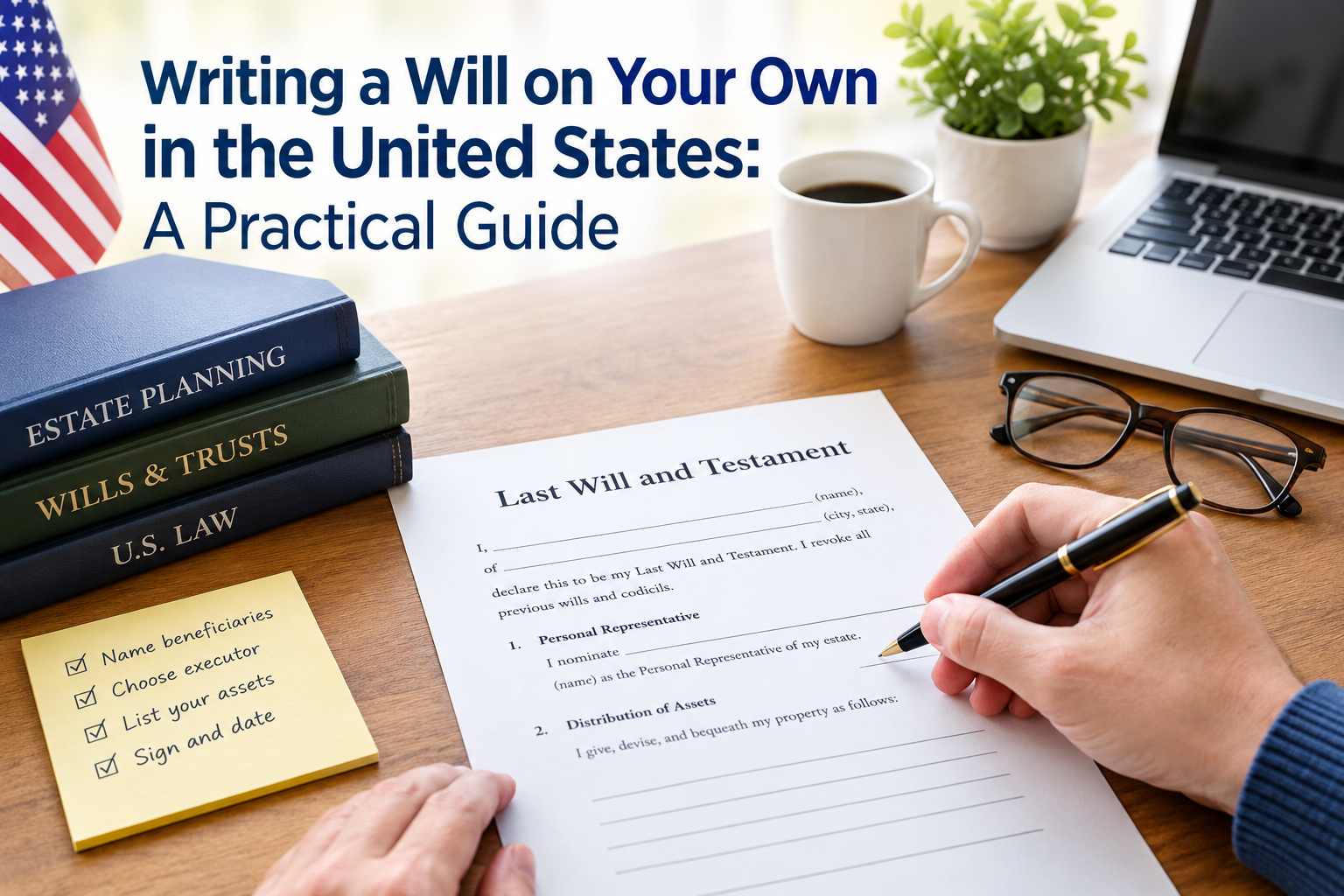
A will is a legal document that states how certain property should be distributed after your death. It generally applies to assets that are part of your probate estate—property owned in your name alone that does not pass automatically to another person or under a separate legal arrangement. A will can also name an executor, the person responsible for handling estate administration, including gathering assets, paying valid debts and taxes, and distributing property as directed. If you are a parent of minor children, you may use a will to express a preference for a guardian. The court considers that preference but makes its decision according to applicable law and the child’s interests.
A will does not necessarily govern everything you own. Many financial accounts, retirement plans, and life insurance policies pass to the people named as beneficiaries, so their designations usually control those assets. Property held jointly with a right of survivorship may pass automatically to the surviving owner. Assets properly held in a trust are generally distributed under the trust’s terms rather than the will. These arrangements can have important exceptions, and outdated beneficiary designations or unclear ownership can create problems. Reviewing how each asset is titled and who is named to receive it can help clarify what your will can direct.
Having a will does not, by itself, avoid probate; it typically provides instructions for the probate process when probate is required. Nor does a will authorize someone to make financial or medical decisions for you while you are alive but unable to act. Powers of attorney and health care directives address those separate needs. If you are considering how to write a will without a lawyer, remember that execution requirements and rules for interpreting wills vary by state. This overview is general educational information, not individualized legal advice. Before signing, check your state’s current requirements for witnesses, formalities, and other validity rules, and consider professional help if your circumstances are complex.
A do-it-yourself will may be a practical option when your circumstances are relatively simple. For example, you may have straightforward finances, a small number of assets, and clear choices about who should inherit them. Your intended beneficiaries may be adults, your property may be located in one state, and family members may generally agree about your plans. In these situations, learning how to write a will without a lawyer can help you organize your wishes and prepare a document that follows your state’s signing and witness requirements. Simplicity does not remove the need to check local law carefully.
Other circumstances make professional advice especially valuable. Consider speaking with an estate-planning attorney if you own substantial or complex assets, property in more than one state or country, or a family business. Legal guidance may also be important for blended families, significant debt, possible estate or gift tax concerns, or a beneficiary with special needs whose eligibility for public benefits could be affected by an inheritance. An attorney can help assess options and coordinate a will with other planning documents, such as a trust, where appropriate.
Seek legal help if you plan to disinherit a close family member, expect someone to challenge your decisions, or face uncertainty about your capacity to make a will. The same applies when another person may be pressuring or improperly influencing you. Disputes and drafting errors can have lasting financial and personal consequences, particularly when family or asset arrangements are complicated. Although general instructions on how to write a will without a lawyer in the United States can explain common formalities, they cannot assess every state-specific rule or your individual risks. If a mistake could create serious conflict, delay, or loss for those you intend to protect, consult a qualified attorney before signing.
A clear inventory is a practical starting point when considering how to write a will without a lawyer in the United States. Set aside time to list what you own, what you owe, and who you may want to receive particular property. The inventory helps you identify decisions that need attention; it does not need to be attached to the will or include every routine possession.
Record major assets such as real estate, bank and investment accounts, vehicles, valuable personal belongings, and ownership interests in a business. Note debts and obligations too, including mortgages, loans, and other significant liabilities. For each asset, identify how it is titled. Property held jointly with a right of survivorship may pass to the surviving owner, while some accounts and insurance policies transfer under a beneficiary designation. Those arrangements can operate separately from instructions in a will, so check current documents and contact the institution if you are unsure.
Next, make a private list of intended recipients. You might name people or organizations to receive specific gifts, such as a family heirloom or a set amount of money. Consider alternate recipients in case someone you name dies before you. Then decide how to distribute the remainder of your estate after debts, expenses, and specific gifts are addressed. Clear, consistent choices can reduce uncertainty for the person administering your estate. Review whether your proposed plan aligns with asset titles and beneficiary forms; a will may not override them.
Keep administrative notes separate from the will. You may record where accounts are held, where important papers can be found, and whom to contact for professional or business matters. Avoid putting passwords, full account numbers, or unnecessary financial details in the will. A will submitted to probate may become part of a public court file, depending on state procedures, so sensitive information is better stored securely elsewhere. Tell a trusted person how to locate those records, and update the inventory when you acquire, sell, retitle, or transfer significant property. This groundwork makes it easier to prepare instructions that reflect your actual circumstances.
An executor is the person responsible for carrying out the instructions in your will and managing practical tasks after your death. The executor typically locates the original will, submits required documents to the appropriate probate court, and helps administer the estate under applicable state law. Responsibilities may include identifying and protecting assets, notifying beneficiaries and creditors, paying valid expenses and debts from estate funds, filing required tax documents, and distributing what remains according to the will. Probate procedures and duties differ by state, so someone serving as executor may need professional guidance.
Choose a trustworthy, organized adult who is willing and able to take on these responsibilities. Consider whether the person can keep records, meet deadlines, communicate with beneficiaries, and handle financial matters impartially. The role can involve considerable time and, in some circumstances, conflict among family members. Ask your preferred executor before naming them, and identify at least one successor in case your first choice is unable or unwilling to serve. Confirm that backup choices are also prepared to accept the role. When considering how to write a will without a lawyer, careful selection and clear naming of these decision-makers can help reduce uncertainty.
If you are a parent of minor children, you can name a preferred guardian in your will and identify an alternate in case the first person cannot serve. Discuss the responsibilities with both people, including the practical demands of caring for your children and the values or routines you hope they will maintain. A nomination communicates your wishes, but it does not guarantee the outcome: a court makes the final appointment, applying the child’s best interests and relevant state law. Also consider how a child’s inheritance should be managed. A separate trust may allow a chosen trustee to oversee assets until the child reaches a specified age or milestone, rather than requiring an outright distribution at an early age. Discuss these arrangements with the people named and review them as your family circumstances change.
Before deciding how to write a will without a lawyer, identify the law that applies in your state. Will rules differ across the United States, and requirements can change. State law may set a minimum age for making a will and require the person creating it, known as the testator, to have sufficient mental capacity. It may also specify which document formats are valid, how the testator must sign, and how many witnesses are required. A form that appears complete may not meet the rules where you live, even if it is accepted elsewhere.
In most states, a valid will must be written, signed by the testator, and witnessed by a specified number of people who meet legal qualifications. The witnesses may need to observe the testator sign, or hear the testator acknowledge an existing signature or the document as their will. Some states restrict who may serve as a witness, particularly when that person is named to receive property. Handwritten wills, sometimes called holographic wills, may be valid under particular conditions in some states but not others. Electronic wills are also permitted only in certain jurisdictions and may have distinct signing and witnessing procedures.
Check current official state statutes and resources published by state courts or government agencies before using a template or signing a document. State-specific estate-planning guidance can help clarify how the rules apply to your circumstances; seek qualified legal advice if requirements are unclear or your situation is complex. Do not assume that notarization alone makes a will valid or replaces witnesses required by state law. In some states, a notary may help complete a self-proving affidavit, which can simplify proof of the will after death, but that affidavit generally does not cure a will that fails the applicable signing or witness rules. Confirm the requirements in force where you live.
A will should identify its maker clearly, using the testator’s full legal name and enough information to distinguish them from anyone with a similar name. State that the document revokes earlier wills and codicils, so readers can identify which instructions control. Name an executor, also called a personal representative in some states, and at least one successor in case the first choice cannot or will not serve. Choose people who are trustworthy and capable of handling records, deadlines, and communication with beneficiaries. The document should also direct payment of legally enforceable debts, taxes, and reasonable estate-administration expenses, subject to applicable law.
Describe specific gifts with precision: identify each recipient by full name and explain exactly what property they receive. Then state how the remaining estate—the residue—should be distributed, including shares or percentages if there is more than one beneficiary. Add contingency instructions for what happens if a beneficiary dies before you, such as whether that person’s share passes to their descendants or is divided among surviving beneficiaries. Avoid vague promises, contradictory clauses, or informal notes that might appear to conflict with the signed will. Keep instructions consistent, and do not assume that a separate letter can change a will’s legal terms.
Parents of minor children may nominate a guardian, while recognizing that a court makes the final appointment under state law. Conditions attached to gifts, trusts, and special-needs planning can have significant legal and tax consequences; these arrangements may require professional drafting rather than a basic form. If you are researching how to write a will without a lawyer in United States, first confirm that a reputable, state-specific form fits your family, property, and intended distributions. Check the state’s requirements for signing, witnesses, and notarization, which vary and may affect validity. Use precise names and plain, direct language, and review the complete document for consistency before signing it correctly.
Knowing how to write a will without a lawyer in United States does not remove the need to follow state-specific signing rules. Requirements differ, and a will that is properly prepared may still be challenged or rejected if it is not executed correctly. Before signing, check the law and official guidance for the state whose rules apply. Confirm how many witnesses are required, whether they must be present together, and whether you must sign the document in front of them or acknowledge an existing signature. Some states also recognize alternatives, such as a handwritten will, but these have separate requirements and are not accepted everywhere.
Choose eligible witnesses carefully. In general, witnesses should be adults who are not receiving gifts under the will, when possible. A beneficiary who witnesses a will may create complications, and state law may restrict or affect that person’s gift. Witness eligibility rules vary, so verify them rather than assuming that any two adults will qualify. Follow the required sequence: sign or acknowledge the will as directed, have each witness observe or acknowledge the signature as the law requires, and ensure that witnesses sign in the required place. Do not leave signature or witness lines incomplete, and keep the signed original in a secure, accessible location.
Avoid writing changes onto the will after it has been signed. Crossing out a gift, adding a handwritten note, or changing a name may not produce a valid amendment and can create uncertainty about the document. If your wishes change, prepare and execute a new will or use a legally valid amendment, often called a codicil, following the applicable state’s formalities. In some states, a self-proving affidavit can help establish that the will was properly witnessed and may simplify probate. It is a separate statement with its own signing and notarization rules; notarization alone does not replace the will’s required witnesses. Check whether the affidavit is available and follow the prescribed format. These details are central to how to write a will without a lawyer while reducing avoidable execution problems.
After signing a will, protect the original from loss, water, fire, and unauthorized changes. The signed original is generally the document an executor may need to present during probate, so a scan or photocopy should not be mistaken for it. Store it in a secure, durable place, while ensuring it remains practically accessible. A document nobody can retrieve may delay administration. Keep a clearly labeled copy separately, and tell the executor which item is the signed original and where it can be found. Consider telling a trusted family member as well, particularly if circumstances change or the named executor is difficult to reach.
Storage choices can affect access. A safe-deposit box may require a key, court authorization, or other steps before an executor can enter; rules vary by institution and state. A home safe should be secure, with access information available to the appropriate person. An attorney’s office may retain documents under its own procedures, while some courts accept wills for deposit under local rules. Before choosing a location, verify applicable procedures and confirm that the executor can obtain the original promptly when needed. Avoid relying on a sealed container, account, or office arrangement that could become inaccessible after death. Record the storage location securely, and update that information if the will is moved.
Estate planning involves more than the will. Maintain a separate, current list of assets and where related records are kept, but do not attach it in a way that could be confused with the signed original or treated as part of the will. Review beneficiary designations on retirement accounts and insurance, ownership arrangements, and any trusts; these may determine who receives property independently of will provisions. Financial powers of attorney, health care directives, and guardianship plans serve different purposes and may require separate documents. Coordinate them to reduce inconsistencies, and revisit them after major life changes. For anyone learning how to write a will without a lawyer in the United States, checking storage access and aligning related documents are practical steps, not substitutes for confirming state-specific requirements.
A will should be reviewed whenever a major life event changes your family, property, or plans. Marriage, divorce, the birth or adoption of a child, or the death of a beneficiary or named executor can make existing instructions incomplete or unsuitable. Review it after moving to another state, acquiring or selling significant assets, or changing whom you want to inherit. A move matters because execution requirements and rules governing wills differ among states. Some jurisdictions give particular life events legal effects, such as revoking a will or changing a gift to a spouse; the result depends on local law and the circumstances. Do not assume an older document remains effective simply because you have not formally replaced it.
Consider professional advice if the language could be read in more than one way, relatives may make competing claims, or you expect a dispute. A lawyer may also be useful when your estate involves substantial or complicated property, business interests, property in multiple states, or potential estate-tax exposure. These circumstances can raise questions that a basic form may not address. If you are researching how to write a will without a lawyer in United States, recognize that a do-it-yourself document is not automatically appropriate for every situation. A limited consultation can help identify state-specific requirements or inconsistencies while leaving you to make the decisions about your wishes.
Before relying on an updated will, use a practical final checklist. Confirm the rules in your current state, including witness, signing, and any notarization requirements. Check that the will’s instructions fit with how assets are titled and with beneficiary designations on accounts, insurance policies, and retirement plans, which may pass outside the will. Follow execution formalities exactly; errors can create uncertainty or prevent a court from accepting the document. Store the signed original in a secure, accessible place, rather than somewhere only you can reach. Finally, tell your executor where it is kept and how to obtain it. Revisit the document periodically, and promptly after any change that could affect your intentions or the way your estate will be handled.