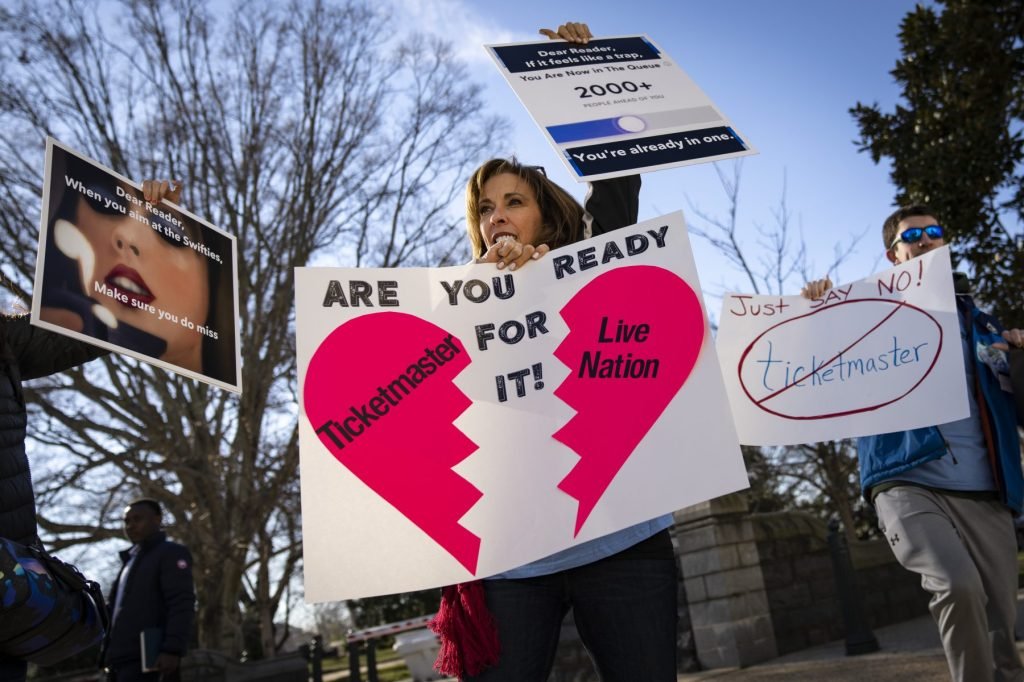
A jury in New York has found that Live Nation runs an unlawful monopoly that touches multiple corners of the concert industry. But it will take some time before we find out the consequences.
The blockbuster verdict, which came down on Wednesday (April 15) after a monthlong trial and four days of jury deliberations, is limited to findings of liability. That means jurors were asked only to decide whether Live Nation monopolized the market for primary concert ticketing and unlawfully required artists to use its promotion services in order to play its amphitheaters — and they answered a resounding “yes” on all counts.
Live Nation will now ask U.S. District Judge Arun Subramanian to overrule that verdict and enter judgment in its favor. If he declines to do so, it’s this judge who will then be tasked with deciding what the ruling practically means for Live Nation’s future by way of a “remedy” — that is, an order for the company to pay financial damages and/or change the way it does business.
Critics of Live Nation, including the state attorneys general that litigated the trial, say the remedy should be the forced divestiture of Ticketmaster. The states’ antitrust case rested on the theory that controlling both ticketing and artist promotion gives Live Nation an anticompetitive edge — specifically, because it threatens to withhold concerts from venues that don’t use Ticketmaster as their primary ticketer. The jury’s verdict could be interpreted as endorsing this argument.
Judge Subramanian could alternatively allow Live Nation to keep Ticketmaster but require the company to sell off other assets, such as certain amphitheaters it owns. Lauren Spahn, an entertainment partner at the law firm Buchalter, says this could be a strategic way for the judge to “weaken [Live Nation and Ticketmaster] without completely killing the combined companies.”
While judges do have the power to split up companies, dating back to the breakup of Standard Oil in 1911, such orders have become rare in the modern court system. In 2024, for example, Google was found liable at trial for monopolizing the online search market. But when it came time for remedies, a federal judge declined to order the forced divestiture of Google’s Chrome browser or its Android operating system.
Related

In the Google search case, the judge instead required the tech giant to change its contracting practices and make certain data available to rivals. It’s possible this case will have a similar outcome, with Judge Subramanian deciding to order damages and putting operating guardrails in place for Live Nation in lieu of a forced divestiture.
Such guardrails could include limiting Live Nation’s use of exclusive ticketing contracts, capping fees or requiring the company to open up its amphitheaters to rival promoters. Live Nation already agreed to make many such changes to its business practices — and create a $280 million payment fund — as part of a proposed settlement with the Department of Justice (DOJ) struck a few days into the antitrust trial. The company said in a statement on Wednesday, “We remain confident that the ultimate outcome of the states’ case will not be materially different than what is envisioned by the DOJ settlement.”
This could get complicated, though. The settlement still needs Judge Subramanian’s approval, and numerous state attorneys general who initially sued Live Nation alongside the DOJ criticized that deal as too lenient before forging ahead with the trial on their own. This now puts Judge Subramanian in the awkward position of simultaneously being asked, by two sets of government agencies that were once litigation partners, to both approve a settlement and order a more stringent structural remedy on the same set of facts. Kenneth Dintzer, an antitrust partner at Crowell & Moring who spent 33 years at the DOJ, says the situation is “unprecedented.”
“Nobody’s ever seen something quite like this,” Dintzer tells Billboard. “So exactly how these cards are going to be shuffled is anybody’s guess.”
The process won’t be quick, either. It could take months, or even up to a year, for Judge Subramanian to gather all the arguments and evidence he needs to come up with detailed decisions on both the settlement and a proposed remedy. Then there’s the appeal. Live Nation has said it “can and will appeal any unfavorable rulings,” and this could drag the proceedings out for at least another year.
In other words, says Spahn: “It’s going to take a while before anything trickles down to the consumer level.”
