By: Dawn Lurie, John Mazzeo, and Alexander Madrak
As we noted last week, certain Temporary Protected Status (TPS) beneficiaries were set to lose work authorization tomorrow under the One Big Beautiful Bill Act (OBBBA). Earlier today, a federal court temporarily paused that change.
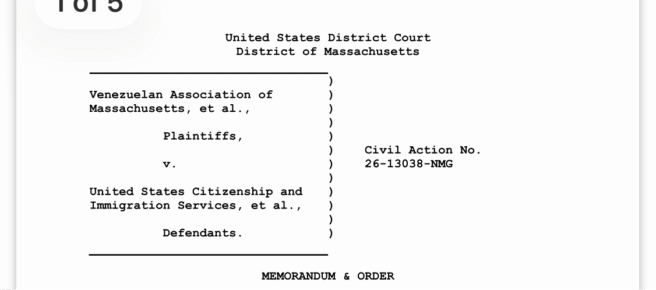
What does this mean:
For now, employers should not reverify, suspend, or terminate employees based solely on the anticipated July 22 loss of TPS-related employment authorization under the OBBBA amendments. If an employee was already eligible to rely on a 540-day automatic extension of an Employment Authorization Document (EAD) before the law took effect, that automatic extension remains available while the court’s order is in place.
Specifically, previously extended TPS Employment Authorization Documents (EADs) remain valid until their earlier extension dates. This means TPS beneficiaries who presented an A12 or C19 EAD with a Form I-797C receipt may continue working for the full 540-day extension period, even if that date falls after July 22, 2026. This primarily impacts TPS beneficiaries who were relying on a previously available 540-day automatic extension of employment authorization
The court’s order appears to apply nationwide and is not limited to the individual plaintiffs. However, the order appears directed at preserving previously available 540-day automatic EAD extensions for eligible TPS beneficiaries and does not appear to restore employment authorization for TPS populations whose TPS designation has already been terminated
The stay is likely temporary and will remain in place while the court considers broader challenges to the agency’s actions, with a ruling expected by August 5, 2026. We cannot underscore enough the likelihood that this pause may be lifted by a higher court, similar to what we have seen with other TPS-related litigation.
What Changes for Employers?
Certain employees that were due to be terminated or suspended may continue to work if an employer previously accepted a TPS EAD and Form I-797C receipt notice showing eligibility for a 540-day automatic extension. The court’s order means that employers should continue honoring those previously valid automatic extensions unless and until further guidance or court action changes the landscape. Examples are below:

Employer takeaway:
If you were preparing to reverify or terminate employment based on TPS-related work authorization expirations on July 22, you should immediately pause. For now, affected TPS beneficiaries may continue to rely on previously issued 540-day automatic extensions, and employers should not take adverse action based solely on the assumption that work authorization terminated under the OBBBA amendments.
At the same time, this litigation underscores the extraordinary volatility surrounding TPS work authorization. Employers should expect continued changes from US Citizenship and Immigration Services (USCIS) and the courts over the coming days and weeks, including the possibility that this stay could be lifted, or overturned on appeal. Human Resources, Immigration, and I-9 Compliance teams should carefully review any pending reverification or separation decisions involving TPS beneficiaries and confirm employee-specific expiration dates before taking action. As has become increasingly common in the TPS context, employers may need to adjust compliance processes on very short notice.
Looking Ahead
The lesson for employers remains the same: proceed cautiously and avoid relying on a single announcement, court ruling, or agency update in isolation. TPS-related work authorization has become a rapidly moving target, with significant consequences for both employees and employers. Organizations should continue monitoring developments closely, maintain flexibility in their I-9 and reverification processes, and consult counsel before implementing workforce actions tied to TPS employment authorization.
For more information, contact the authors, Dawn Lurie, John Mazzeo, and Alexander Madrak or your Seyfarth relationship partner directly. Seyfarth’s Immigration Compliance & Investigations specialty group is recognized as a national leader in the field. Trusted by Fortune 100 companies and small businesses nationwide, the team provides strategic, practical guidance across the full spectrum of immigration compliance. The group advises on Form I-9 and E-Verify compliance; ICE inspections and worksite enforcement actions; internal immigration assessments and I-9 audits; DOL immigration-related wage-and-hour investigations; H-1B compliance; and DOJ’s IER and OCAHO anti-discrimination matters, including foreign sponsorship and export control/ITAR issues. The team complements its expertise in the Immigration Compliance and Investigations sector with its first-in-class litigation capabilities. For additional timely updates on all things immigration, subscribe to Seyfarth’s dedicated immigration blog at throughtheimmigrationlens.com.