
Image from Shutterstock.
Let’s talk about every lawyer’s favorite subject: exams. It seems like every day, there’s another threshold that generative artificial intelligence crosses.
First, it was able to take a bar exam and do reasonably well. Then it was able to ace it. Same with law school exams. Right now, AI would probably graduate at the top of its class, edit law review and land a six-figure associate’s job with an Am Law 50 firm.
Now comes another milestone. Generative AI can, apparently, grade law school exams with close to the same accuracy as a human.
So what does that mean for law professors? Should they be worried about AI taking their jobs—assuming that they don’t already have tenure, of course? And where is this technology heading?
In this episode of the Legal Rebels Podcast, Daniel Schwarcz talks to the ABA Journal’s Victor Li about his research into generative AI, what it’s capable of and where it’s heading.
Schwarcz is a professor at the University of Minnesota Law School, where he teaches insurance law and writes extensively about AI and the law. He recently co-authored a paper looking at whether generative AI tools can grade law school exams at close to the same level as humans.
See also:
Can a chatbot earn a JD? This one averaged C-plus on law school exams
Latest version of ChatGPT aces bar exam with score nearing 90th percentile

Want to listen on the go? Legal Rebels is available on several podcast listening services. Subscribe and never miss an episode.
Apple | Spotify | Google Play
In This Podcast:
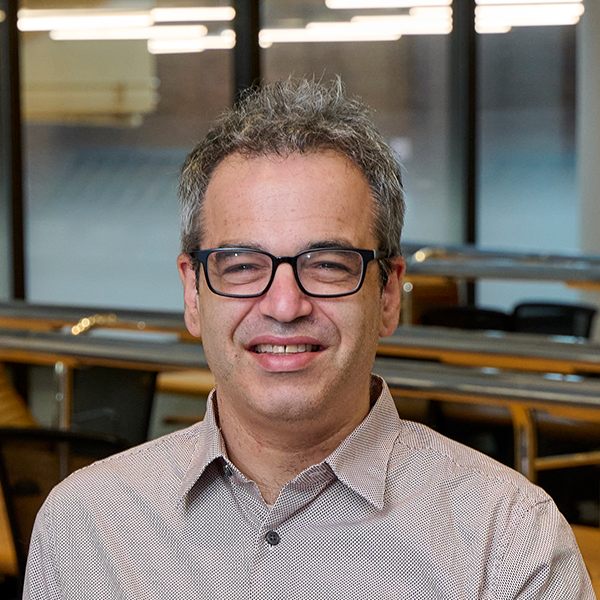
Daniel Schwarcz. (Photo from the University of Minnesota Law School)
Daniel Schwarcz is a professor at the University of Minnesota Law School, where he teaches insurance law and writes extensively about artificial intelligence and the law. He recently co-authored a paper looking at whether generative AI tools can grade law school exams at close to the same level as humans. Schwarcz joined the University of Minnesota Law School faculty in 2007, after completing a Climenko fellowship at Harvard Law School. He has also taught as a visiting professor at the Washington University School of Law in St. Louis, at the University of California at Los Angeles School of Law and at the University of California at Berkeley School of Law. He earned his bachelor of arts degree from Amherst College and his JD from Harvard Law School. After law school, he clerked for Judge Sandra Lynch of the 1st U.S. Circuit Court of Appeals at Boston and practiced at Ropes & Gray, where he worked mainly on insurance law matters.