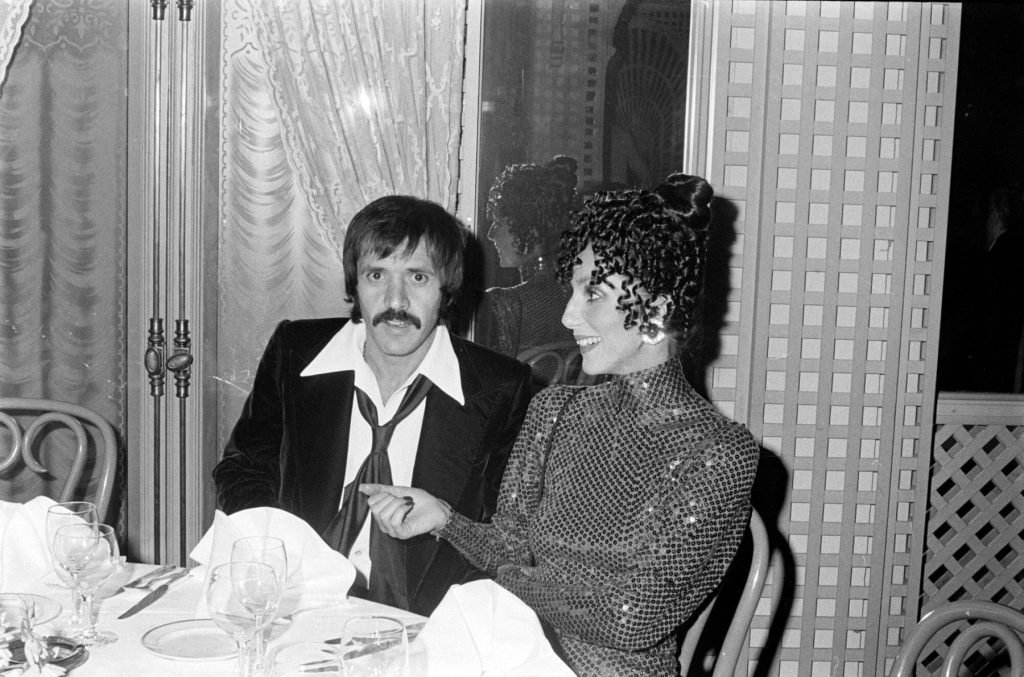
A federal judge has refused Cher’s request that Sonny Bono’s widow repay more than $1 million in legal bills the music legend racked up during their court battle over royalties to “I Got You Babe” and other hits.
Cher wanted to be reimbursed for the legal fees she spent defeating Mary Bono’s effort to stop paying royalties under Cher’s divorce settlement with Sonny — an argument rejected by a judge in 2024. Cher claimed Mary had “dragged” the case out for years by taking “unreasonable positions.”
But in a decision on Monday (July 20) obtained and first reported by Billboard, Judge John A. Kronstadt said the rules that would have allowed such forced repayment didn’t apply to Cher and Mary’s specific dispute, since it centered more on contracts than federal copyright law: “The motion is denied,” he wrote.
The ruling leaves Cher the winner of the overall case, but stuck paying an eye-watering legal tab she says ended up at $1,023,605 — a bill that’s not atypical for top-flight law firms handling years of complex litigation. Her attorneys did not immediately return a request for comment.
Mary is currently challenging Cher’s earlier victory in the case at a federal appeals court, which has yet to rule on it. Her attorneys also did not return a request for comment.
Sonny and Cher’s 1978 divorce settlement gave her a permanent 50% cut of the publishing revenue from songs written before they split up, including “The Beat Goes On” and “Baby Don’t Go.” Bono later married Mary, then passed away suddenly in a 1998 skiing accident.
Mary sparked the dispute in 2021 by arguing she was no longer required to pay out under the divorce deal because of copyright’s termination right — a provision that allows songwriters and their heirs to win back control of their songs decades after they gave them away. Mary argued the divorce settlement was no different than a songwriter selling their rights to a publisher, meaning she could void it under termination.
But in a May 2024 decision, Kronstadt ruled that termination didn’t apply to Sonny and Cher’s divorce settlement, which he said was a contract for financial compensation rather than a copyright assignment. In November, he finalized that victory for Cher.
Following that ruling, Cher said that it was only fair that Mary repay the attorney’s fees she had racked up defeating a legal argument that sought to revoke “millions of dollars” in her royalties. She argued that Mary’s positions had been unreasonable and had made the case last far longer than necessary.
“Defendant argued, repeatedly and frivolously, that a federal statute that expressly states it does not affect state-law rights somehow extinguishes those state-law rights,” her lawyers wrote in January.
Copyright law, unlike many other areas of the American legal system, allows for victorious parties to demand their opponents repay their legal bills in certain cases. But in Monday’s ruling, Kronstadt said that rubric didn’t apply to the case for the same basic reason he’d sided with Cher on the dispute itself: that the litigation centered more on a dispute over contract law than over federal copyrights.
“It has been determined that this action arises under California contract law, not [federal copyright termination rules],” the judge wrote. “In light of the foregoing, because [the Copyright Act] does not apply to the matter at issue, plaintiff’s motion is denied.”
