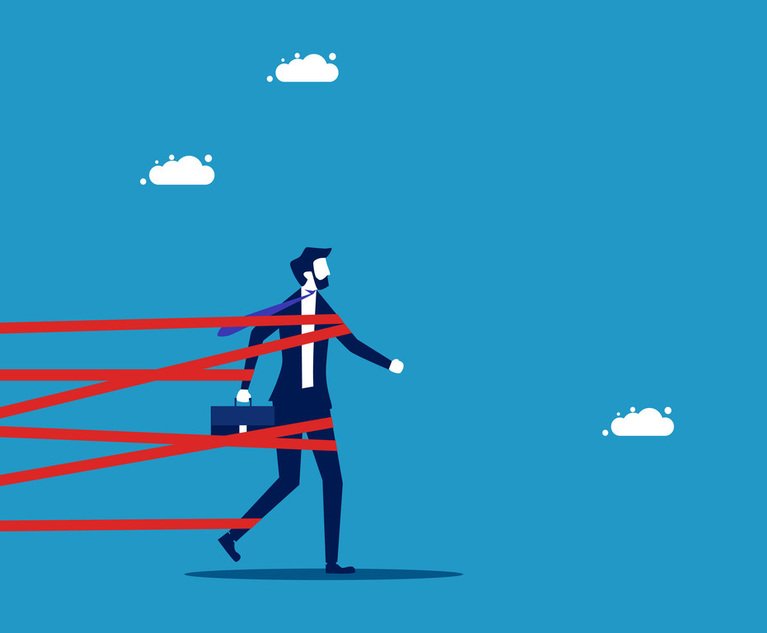
In a classic anxiety dream come to life—thankfully with clothes on—about 5,600 law graduates were set to sit the February California Bar Exam, and faced technical problems like difficulty logging in, system crashes, lagging and malfunctioning features like copy and paste. Reportedly about 1,300 of the registered applicants withdrew.
Now, candidates have filed two putative class actions that delve into liability arguments, even as damages remain hazy.
“It is stunning incompetence from an entity that exists to measure competence,” Erwin Chemerinsky, dean of the UC Berkeley School of Law, told the LA Times about the far-reaching and debilitating technical issues that occurred during California’s inaugural hybrid format bar exam that combined in-person at testing centers and remote testing via the defendant’s online proctoring system. All test-takers both remote and at testing centers who opted to use a computer instead of taking the test by hand had to purchase the Meazure software.
Instead of being an essay question on the bar exam they were attempting to take, this terrifying fact pattern was all too real. Test-takers who had been practicing issue-spotting for months knew what they had to do. They filed two federal class action lawsuits against Meazure Learning, the vendor hired by the California bar.
The first class action, Perjanik v. Proctoru Inc., was filed on Feb. 27 by Tycko & Zavareei and the second, A.M. v. Proctoru Inc., was filed on March 3 by Nye, Stirling, Hale, Miller & Sweet and Sauder Schekopf LLP.
Both lawsuits allege specific challenges and hardships the plaintiffs endured. For example, Trisha A.M, the named plaintiff in the March 3 action recounts her issues finding a testing location within 50 miles of her residence. Ultimately she had to travel almost two hours to the South San Francisco Convention Area to take the test. And that was after a customer service nightmare where she was passed back and forth between the defendant and the California Bar Examiners.
The February class action tells a similar story, that in advance of exam day, some applicants reported having their site reservations canceled or were assigned to sites located hours from their homes. Others reported receiving conflicting information about rules, deadlines and procedures.
When Trisha A.M finally sat for the test she was surprised to note that the copy and paste function was inoperable because that had been an issue reported during the January 2025 mock exam. According to the February complaint, some applicants were even kicked out of the mock exam unexpectedly with no explanation. Interestingly, the March complaint contends that prior to the test, the California Bar preemptively offered all test-takers a waiver to take the test in July that class members submit indicates prior knowledge of the issues to come.
The Feb. 27 class action characterizes the Exam as a “disaster for test-takers who were traumatized, who had their career ambitions delayed, and who paid Meazure a fee for a defunct platform.” It also contends what all lawyers know deep in their bones, that the bar exam is one of the “most important and stressful milestones” for aspiring lawyers, and points out that California does not have reciprocity with other state bars so law graduates who fail the California Bar Exam cannot work as lawyers in that state.
Court: U.S. District Court for the Northern District of California
Case Type: Breach of Contract, Consumer Protection
Industry: Business Services
Liability Arguments: The March 3 action opens with a classic breach-of-contract charge claiming that class members paid the defendant money and the defendant agreed to provide a specific product.
It also accuses the defendant of violating the California Legal Remedies Act emphasizing the defendant’s knowledge that the software was unstable and full of bugs and ultimately unsuitable to use for the bar exam. Other claims include violation of the California Unfair Competition Law and unjust enrichment.
The February complaint charges the defendant with breach of warranty, implied warranty, violation of the Song-Bevery Consumer Warranty Act and the California Unfair Competition Law, unjust enrichment and negligent infliction of emotional distress.
Damages: They’re hard to quantify and neither lawsuit asks for a dollar amount. How do you add up lost job opportunities, additional financial burdens and the emotional toll that test-takers suffered along with the anticipatory stress and anxiety they face contemplating going through this again.
Though, with an assist from Reddit, here are some ideas from the class: According to ‘Poll: 25 Remedies’ the award of additional points or adjusting scoring methods are an option.
One Redditor wrote, “I want a handwritten retake at my law school. I want $3,000 in future fees to spend on my licensing costs with the bar. I want to take the July 2025 bar exam if necessary for free.”
That last one might actually be happening.
The State Bar Board of Trustees authorized a waiver of the application fee for the July 2025 bar exam for applicants who are unsuccessful on the February 2025 bar exam despite their good faith efforts and for those who withdrew from the exam.
Additionally, according to the Office of Admissions of the State Bar of California, a retest is being offered on March 18-19 for applicants who meet certain criteria. Additionally, in a meeting scheduled for March 14, a proposal to provisionally license February exam takers is on the agenda as is a return to in-person exam administration.
These actions were surfaced by Law.com Radar, which delivers AI-enhanced case summaries and daily case reports from more than 2,200 state and federal courts. Click here to get started and be first to act on opportunities in your region, practice area or client sector.