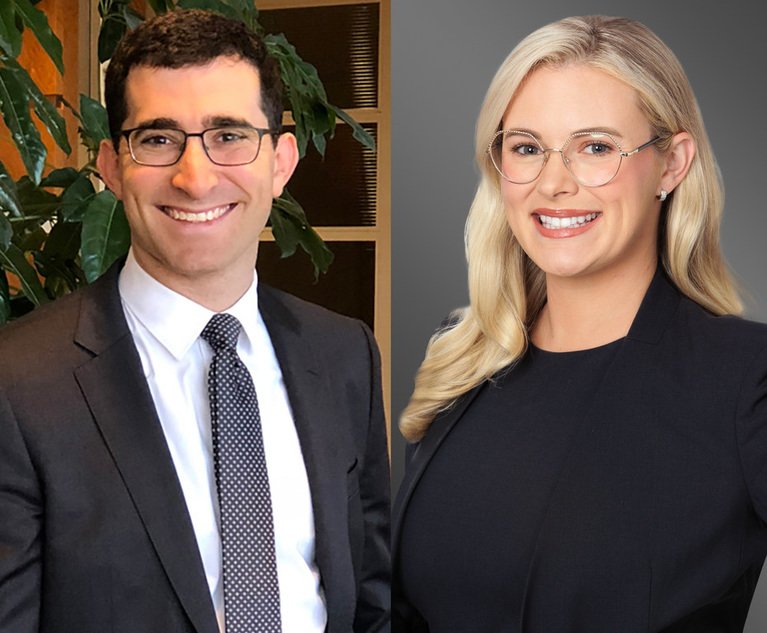
Backers of a project to direct pro bono efforts at fighting climate change say you don’t have to be an environmental lawyer to make a difference.
The Climate Pro Bono Bootcamp, an all-virtual event running April 22 and 23, seeks to link attorneys with underserved communities, climate organizations, mission-driven startups and grassroots movements in their fight against the climate crisis.
Hoping to exceed last year’s participation level of 700 attorneys, the pro bono boot camp seeks to introduce participants to the breadth of pro bono opportunities available in the climate space. The boot camp is presented by Green Pro Bono, a nonprofit that facilitates climate change by providing pro bono legal services, along with 300-lawyer Offit Kurman and a newsletter, Planetary Lawyer Project. There is no charge to register.
Pro bono work has provided exposure to a wider range of responsibilities than an associate typically encounters, says Jenna Rackerby, a second-year associate at Greenberg Traurig in New York who participated in the boot camp for the first time in 2024 and will be a presenter in this year’s program.
“It gives you an opportunity to dabble in projects that you typically won’t get. It’s the only opportunity you get to specifically pick out your client,” Rackerby said.
In her early pro bono work, Rackerby has worked for Maple & Monroe, a think tank focused on climate and social impact. There, she focused in intellectual property work, such as trademarks, copyrights and terms of use for the organization’s website. She also produced a 100-page employee handbook for an urban farm in Brooklyn. That project was particularly challenging because the rules are changing rapidly and the document had to be correct, Rackerby said.
Besides reinforcing the importance of pro bono work, the boot camp expands the definition of what climate change pro bono can look like, Rackerby said.
“Climate work touches everything from housing, public health and energy access, to land use and disaster recovery,” she said.
Rackerby’s current practice is mostly regulatory and transactional, but her involvement in organizing a panel for the boot camp has pushed her to explore the different types of climate litigation, such as impact litigation, defense of environmental protesters, and community-based suits related to environmental justice. She is also finding that stepping out of her comfort zone allows her to refine her public speaking skills, deepen her understanding of litigation strategy and engage with attorneys from a range of backgrounds, Rackerby said. Organizing a panel has helped her build meaningful connections with those in private practice, nongovernmental organizations and academia, she said.
Rackerby said a partner from her firm provides supervision of her pro bono work but she nonetheless feels a sense of ownership with those assignments.
“I love my job. But this gives you autonomy. Today, it’s very rare as a first-year, second-year, third-year associate, to actually have ownership of something, where you are the point of contact, you are providing legal advice to this entity that needs your help, so they can continue doing climate work,” Rackerby said.
The boot camp program includes a combination of motivational and skills-building seminars, plus a video address from U.S. Sen. Cory Booker of New Jersey, who offers his support, said Matthew Karmel, a practice group leader for environmental and sustainability law at Offit Kurman. The idea for the boot camp came from a Pro Bono Institute report that said 6% of all pro bono work was environment-oriented, said Karmel. That struck him as really low, and he decided many people don’t know what environmental pro bono is, and don’t think they have the skills to do environmental pro bono.
“The idea of the boot camp was, let’s talk about what climate pro bono is so that people see it’s attainable, it’s achievable, they already have the skills to be doing it. And at the same time, let’s do some skills work. The bottom line is, there are a lot of varied skills, and every lawyer has a skill that relates to climate pro bono. Like forming a business—it doesn’t matter if it’s a climate business or a non climate business, but there’s a lot of climate startups that need formation advice,” Karmel said.
The boot camp is aimed primarily at audiences in the United States, although many people outside the U.S. have expressed interest. Some of the content presented is universal, such as work-life balance, Karmel said.
After recruits complete the training program in the boot camp, they will be equipped to find pro bono environmental projects, including some through Green Pro Bono. Some pro bono opportunities come from organizations like Green Pro Bono, while others come from community involvement and hearing of circumstances where there’s a need for pro bono counsel, Karmel said. One early pro bono assignment he worked on was when he learned that a community garden group complained that its composting efforts were hampered by local regulations.
“I was at a cocktail party and someone said, I run this community garden. We can’t do X, Y and Z, it’s unfair. It imposes burdens on the urban community and minorities. And I said, ‘can I be your lawyer?'” Karmel said. “We’re working on that project, and we’ve made a lot of progress on that over the years, and there’s actually legislation pending right now in the New Jersey legislature to fix the problem.”