It’s been five years since the COVID-19 pandemic. But the legal industry is still feeling the ripple effects.
Judges say it is clear in courtrooms, especially in young attorneys’ deteriorating behavior that key aspects of the art of litigating are being lost.
They say while seasoned trial lawyers once honed their craft through rigorous in-person advocacy, today’s younger lawyers face a starkly different online landscape.
And judges are noticing what they say is a lack of preparation and decorum.
Once, for instance, retired Florida Judge Robert Diaz saw a lawyer “on her phone” for her client’s entire cross-examination, demonstrating what the judge saw as a troubling lack of attention.
In other instances, judges note attorneys’ inappropriate dress, poor communication and downright rudeness.
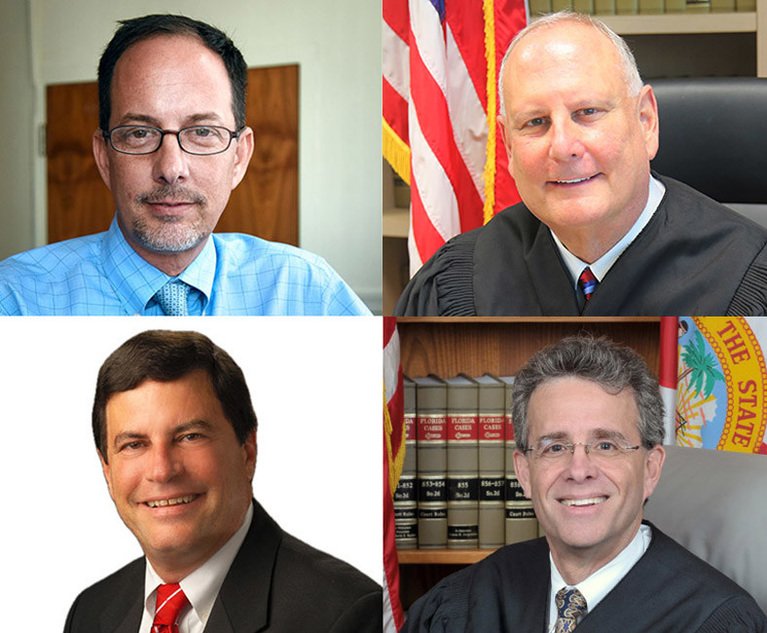
“The pandemic was a big kick backwards,” retired Florida Judge Louis Schiff said.
‘Their Idea of Court Is Zoom’
For Schiff, the shift was clear.
“Many lawyers show up to … hearings casually dressed, eating lunch,” the judge said. “You have to say, ‘Please, don’t do that.'”
That’s especially true with newer attorneys, said Broward Circuit Judge Jeffrey Levenson, of South Florida, who notes some lawyers are now only accustomed to virtual proceedings.
“It’s like they’re a fish out of water,” Levenson said. “We have a whole generation of lawyers who’ve never stepped inside of a courtroom. Their idea of court is Zoom.”
And the fallout has been immediate.
“It got so bad once, I had to refer a lawyer to the Florida Bar for their unethical behavior and motions,” Schiff said. “We judges are gatekeepers, and we have to be sure that the rules are applied fairly, and that people understand what the rules are. And if we can teach a generation of law students how to do these basic fundamental things, how to communicate without being a jerk, then I think we will improve the situation.”
Schiff, who served 28 years on the bench, is also an author and adjunct professor at Mitchell Hamline School of Law.
He understands broad generational divides, but sees other factors at play.
“Every generation thinks that the generation that’s coming after is not as prepared as they are. I think that was true when I was a young lawyer as well. I’m sure that when I was a young lawyer and when I was a brand new judge, people may have looked at me in the same light and said, ‘This person may not be ready for the task.’ But it’s our job as professionals to bring these lawyers up to speed,” he said. “We need more mentors. … Let’s show you how to ethically argue a motion in front of a judge. Let’s teach you how to speak to opposing counsel on the phone. Let’s teach you how to write a motion without disparaging the opposing counsel.”
Florida Judge Daniel J. Kanner agrees the profession suffered from a drop in in-person trials.
“Having been a litigator for 22 years before I took the bench, I can tell you the lessons I learned by sitting in court and talking to other lawyers were immeasurable,” the Broward County Court judge said. “I had the opportunity to sit in court and hear and see all of the nuances of a court hearing, judge’s body language, the whispers of people in the gallery, and the interaction of other lawyers with their clients. All of these things and more gave a total picture as to what was going on and what was going to happen.”
Kanner, who spent about a decade on the bench, is also a former prosecutor.
“In the courtroom, you could communicate with your colleagues in real time, without the need to post a question for all to see in a chat,” Kanner said. “The flow of information was fast and furious. I learned a lot from those experiences. I learned even more by talking … regardless of the subject matter, we got to know each other on a personal basis. Friendships were formed and trust (or mistrust) was earned. As much as due process is a cornerstone of the law, I believe communication is the cornerstone of the practice of law.”
Kanner said the pandemic changed much of that.
“Lawyers can do things faster and more efficiently. Because of this we can take on more cases,” he said. “Clients can expect faster results, often at less cost. In turn, lawyers don’t have as much time to contemplate how they are going to handle a hearing.”
That’s why court administrators and judges are looking for solutions.
Levenson, for instance, tries to be supportive of young lawyers, who are sometimes nervous when they appear before him. The jurist attempts to be “flexible and nice to them” and provides feedback after hearings.
Levenson believes lawyers have traditionally learned and “get their comfort level up” by going to court during motion calendars. But getting attorneys to attend such proceedings nowadays is a challenge, despite effort by the court.
“We have devoted Thursdays to uniform motion calendar,” Levenson said. “Guess what? No one schedules anything on Thursdays. … The idea was that the big firms would send their young associates over to get into the courtroom. And I guess for whatever reason, they’re not doing it, but I’m sticking with it.”
The solution, the way Levenson sees it, “has got to be a concerted effort by the bar.” He notes that judges have been amenable to in-person hearings, with some courts dedicating specific days to face-to-face proceedings.
Levenson said, “I truly believe that when lawyers have to come in person, they behave differently, and they’re more collegial.”
For Diaz, the retired Florida judge, young attorneys seem “totally addicted to their phones”—and that often morphs into unprofessional conduct in court.
In one case, the judge asked attorneys, jurors , litigants and others in the courtroom to put away and silence their cell phones.
But one attorney, whose client was on the stand, did not comply.
“She was on her phone, and I was looking at her, and she was on there for two minutes while her client was getting cross-examined. She wasn’t paying attention. So after the trial, I said to her, ‘Listen, the jurors don’t have their phones out, and you were sitting there texting while your client was getting cross-examined,'” the judge recalled. “She said, ‘I wasn’t texting.’ And I said, ‘Okay, what were you doing?’ She goes, ‘I was doing research.’ And I said, ‘Well, you know, the jury doesn’t know that. They think you’re not paying attention.’ She goes, ‘Well, I won my case, didn’t I?’ I said, ‘Yes, you did. So never mind, forget I even said anything,’ because I could see that she was not going to listen anyway.”