College athletes are making millions through Name Image and Likeness (NIL) rights and South by Southwest expert panelists discussed how those contracts continue to transform college athletics.
The panelists, who participated in “NIL in College Athletics: Legal & Regulatory Trends,” delved into the National Collegiate Athletic Association guidelines and how lawyers can effectively negotiate NIL contracts for college athletes. The Continuing Legal Education session drew one of the largest crowds with more than 100 members in the audience.
Shawn Abboud, managing director of Morgan Stanley’s global sports entertainment division, said the NCAA initiative allows college athletes to profit from their brands. And it’s not just football but any college athlete in any sport including basketball, swimming, volleyball, tennis, rowing and more.
“To understand where we are right now with NIL, it results from a complete failure by the NCAA over 40 years to figure out how to properly represent athletes,” said Demaurice Smith, professor at Pepperdine School of Law and former executive director of the NFL Players Association.
Since July 1, 2021, student athletes can monetize their brands but no federal legislation or specific NCAA NIL rules have been established.
“So, the chaos that we see is, I think, the lack of leadership, the sort of flux in the market, but it comes from lack of leadership,” Smith said.
Abboud said the NCAA’s NIL rule now opens a new world of opportunity for athletes and lawyers.
As Larry Waks, a partner at Reed Smith who represents actors and athletes, enthusiastically pointed out, the total addressable market for NIL is enormous and ‘nearly limitless.’
“NIL associated with successful athletes is very valuable, and there’s absolutely no reason why they shouldn’t obtain the value associated with it,” Waks said.
Waks said the private third-party stream for athlete endorsements, which includes brands like Coca-Cola, Nike, and even the local sandwich shop, is unlimited.
“It’s an exciting time,” he said. “It’s a lot of untested waters.”
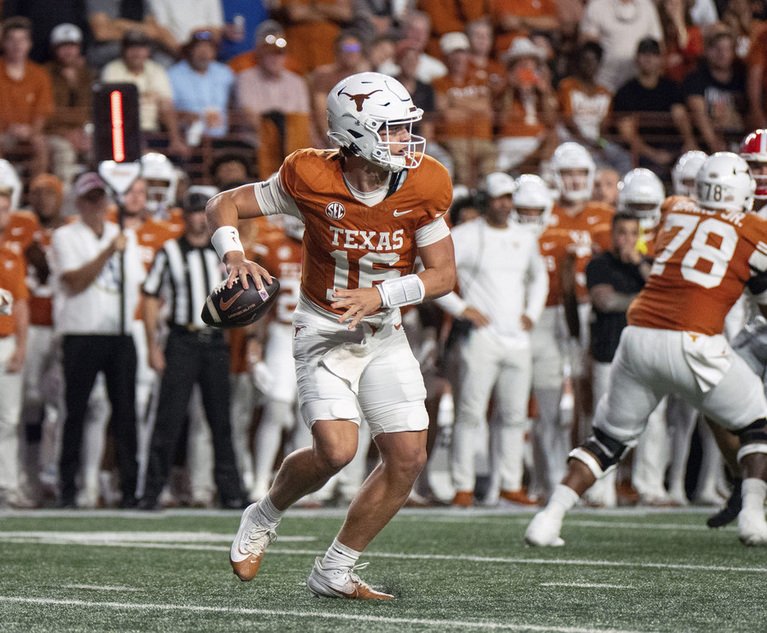
The talk in the locker room about NIL deals is not just exciting but potentially life-changing, as Michael Taaffe, a 22-year-old safety with the University of Texas football team, who turned down a contract with the National Football League, shared.
The NIL contract Taaffe negotiated through his agent with a third party made it easier for him to return for his college year to focus on winning a national championship.
“If I’m getting offered a million dollars to play in the NFL, how can I give up a million? You’ll play one more year when NIL gives you that opportunity,” he said.
From his freshman year to his senior year, the market and the rules and regulations around NIL deals have been a roller coaster that the athletes have had to figure out, Taaffe said.
The market lacks transparency today. What college players are making in various sports is not clear.
Abboud said he can access college athlete deal data and advise clients on the average salary for their sport, position, school, and conference.
“In my old job, if an agent called up the NFL PA called our salary cap department and said I’m doing a contract for a left tackle, I want to know exactly what the going rate is for every left tackle, what their benefit structure is what their bonus structure is you tell them,” Smith said. “That helps the market because it allows you complete transparency about what to do. Now the teams have all the leverage because, in college sports, there is no transparency.”
According to On3 Sports, Texas Longhorns starting quarterback Arch Manning’s NIL deals are worth $6.5 million, and he has a new deal with Uber, making him the highest-paid college athlete.
The Texas One Fund, which raises money for UT athletes, distributed $13.3 million to UT athletes in 2023, according to an article in Sportico citing the nonprofit organization’s tax filings.
Waks said that a lot goes into negotiating NIL contracts.
“They’re almost like futures contracts,” Waks said. “So, there’s a lot of negotiation with regards to force majeure provisions, morals provisions, and so on.”
“I always try to negotiate for my clients, not just revenue but that piece of the pie—some equity,” Waks said. He said that if and when the brand has a happy liquidity event, the athlete can profit as well.